Senior Women Executives Are Everywhere in Business, Except Onstage
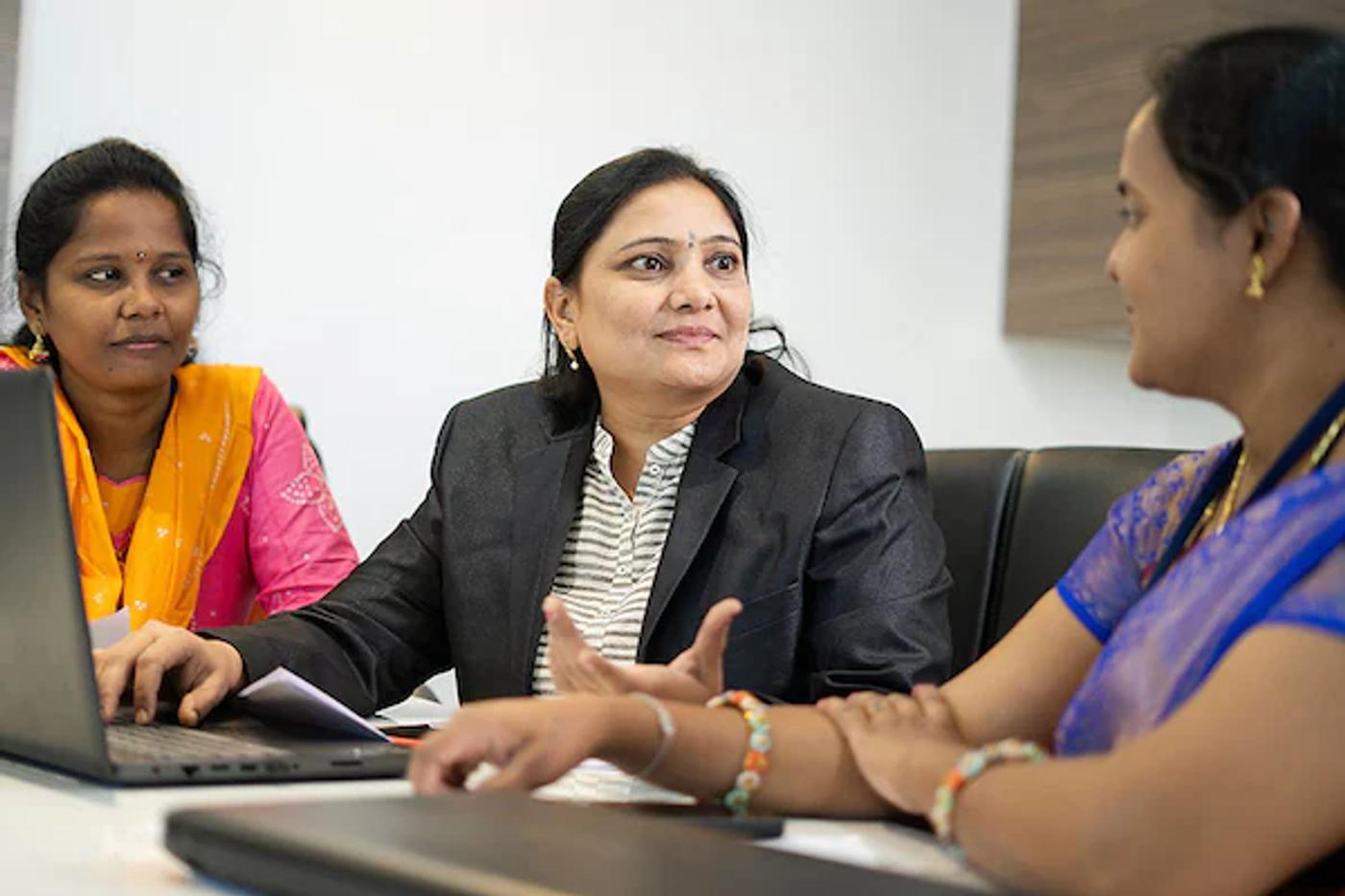
Open any panel invite list for a major Indian business conference this year and you'll find the same pattern that's held for a decade: three men and, if the organisers were paying attention, one woman. Look at the org charts of the companies those men represent, though, and the picture has quietly shifted. Women now hold rising shares of CFO, COO, and CTO roles across Indian companies, according to 2026 tracking data, in numbers that would have been unthinkable even five years ago. The pipeline has moved. The stage hasn't caught up.
The Numbers Behind the Headline
Start with what's actually changed. Women CEOs in NSE 500 companies crossed 7% in 2025, up from just 3% in 2018, and the pipeline of women in COO, CFO, and CTO roles has nearly doubled since 2020. That's a real trendline, not a rounding error. Board representation has moved too: women now hold 27.1% of board seats in NSE-listed companies, with Nifty 500 companies averaging above 30%, crossing what governance researchers call the "critical mass" threshold linked to better outcomes for the companies themselves.
The second edition of the Women Leadership in Corporate India Survey, run jointly by AIMA and KPMG in India, adds texture to that trend. It found 71% of organisations reporting an increase in women leaders over the past five years, and women now hold roughly 20% of leadership roles in mid-market companies, up from 13% in 2016. Read quickly, that's a good-news story about Indian corporate India finally getting its act together on gender.
Read more carefully, and the same survey flags exactly the problem this essay is about: 79% of women professionals aspire to leadership roles, but only 1% currently hold board-level positions. Ambition and pipeline have grown faster than actual power has changed hands, and speaking opportunities, which function as a kind of informal power in their own right, have lagged even further behind than boardroom seats.
The survey also found that the low-representation problem is shrinking, if slowly. In 2024, over half of organisations surveyed reported that women held only 10 to 30% of leadership positions internally, and 9% had none at all. By 2026, that low-representation group had narrowed to 46% of organisations, though 10% still reported zero women in leadership. Progress, in other words, but progress measured in single-digit percentage points a year, moving through internal structures that outsiders rarely see and that speaker booking teams have even less reason to track closely.
What "Nearly Doubled" Still Doesn't Mean
It's worth sitting with how uneven the C-suite gains actually are before getting to the visibility gap, because the two problems compound each other. Analysis of listed Indian companies found only about 5.21% currently have a woman MD or CEO, and a majority of those are from promoter families rather than professional appointees, meaning the "outside" pipeline into the very top job is still thin. Separate research on CXO-level roles found that around 62% of women in the C-suite sit in HR, while the strategically weighted titles, CEO, CTO, CFO, remain disproportionately male. Fewer than 1% of Indian CTOs or CIOs are women.
So when a conference organiser says "we couldn't find a woman CFO to put on this fintech panel," they're technically describing a real scarcity, just a much smaller one than the panel lineups over the last ten years suggest. The women in these roles exist in far greater numbers than the panels reflect, and the honest problem isn't zero supply, it's an organiser default that hasn't updated to match a pipeline that has.
The pattern isn't unique to finance and operations, either. It shows up wherever a sector has more women in the pipeline than it has women on stage. Coverage of India's cybersecurity and infrastructure sectors this year pointed to the same paradox playing out in STEM more broadly: women account for nearly 43% of STEM graduates in India, yet only around 14% ultimately participate in the STEM workforce, and the gap between those two numbers widens further once you look at who gets invited to speak about the field rather than just work in it. The CFO/COO/CTO story is a specific, measurable version of a pattern that repeats across every technical and leadership function in the Indian economy.
Why the Org Chart Doesn't Translate to the Podium
There's a structural reason for the lag, and it isn't malice. Conference programming teams and media bookers work from habit and from existing Rolodexes, both of which were built during the years when the numbers above were even worse than they are now. A CFO who made her title in 2024 doesn't automatically appear on anyone's speaker shortlist just because the title exists; shortlists get built from who spoke last year, who a producer already has on WhatsApp, who a moderator has interviewed before. Titles are necessary for stage invitations, but they are not sufficient, and nobody actively maintaining that shortlist is checking Prime Database or KPMG survey data before sending it out.
This is a version of a problem we've written about before, and it holds here in a specific form. Titles change faster than habits do. The women now running finance, operations, and technology functions across Indian companies are, in effect, invisible to an industry that hasn't updated its list of who to call.
There's also a quieter, more structural piece: women CXOs in India carry an average of 24 years of experience against 22 years for their male counterparts, meaning they typically reach the same title later and with a longer track record behind them, a track record that should make them more compelling stage picks, not less visible ones. The lag isn't about credentials. It's about who gets remembered when someone is building a panel in a hurry.
The manel problem itself is not an Indian invention. Researchers writing about all-male panels in medical and scientific conferences have documented the same self-propagating cycle for years: a lack of gender diversity in leadership spills into speaking opportunities, which then reinforces the lack of diversity in leadership, because the people young professionals see representing a field shape who imagines a future in that field. What makes the Indian corporate version of this cycle notable right now is the timing. The leadership gap that fed the cycle for the last decade is measurably narrower than it used to be. The speaking gap hasn't registered that change yet, which means, for the first time in a while, the fix is genuinely just a sourcing problem rather than a supply problem.
The Cost of Staying Invisible
The visibility gap has consequences that compound beyond any single event. A woman CFO who never appears on a panel doesn't just miss one afternoon of stage time; she misses the chance to be the reference point a journalist calls next time there's a story about corporate finance, the name a search committee recognises when filling a board seat, the person a younger woman in the audience decides she wants to become. Speaking opportunities function as a distribution mechanism for reputation, and reputation is what converts a strong internal track record into external opportunity: board seats, advisory roles, the next bigger job.
Younger professionals notice who's missing from the stage before they notice who's missing from the org chart, because the stage is what's visible to them. If the CFOs, COOs, and CTOs a company actually has never show up as the industry voices representing that progress, the progress itself stays invisible to exactly the audience it should be inspiring, and the perception gap outlives the reality gap by years.
There's a compounding effect specific to finance, operations, and technology roles, too. These are functions where external credibility, being quoted in a business publication, being asked to weigh in on a regulatory shift, being the name a board search firm surfaces, matters directly to career progression in a way it doesn't for every role. A CFO's public visibility affects investor confidence and, eventually, her own case for a CEO seat. A CTO's public visibility affects whether she's seen as an industry authority or just an internal operator. Keeping these roles off panels doesn't just under-serve the individual women in them; it slows the very pipeline into CEO and board roles that the 2026 numbers suggest is finally starting to move, because visibility is one of the mechanisms that pipeline actually runs on.
What Would Actually Close the Gap
None of this requires waiting for the next KPMG survey to show more improvement. It requires organisers and media teams building new sourcing habits to match the pipeline that already exists, the same way a searchable directory of vetted women experts is meant to shortcut the "we couldn't find anyone" excuse that keeps circulating despite the numbers above.
It also requires looking past the CEO title as the only qualifying credential for a stage invite. The visibility conversation in Indian media tends to circle around a small, repeating set of names, often drawn from the same Forbes and Fortune power lists every year, while the much larger and faster-growing group of women one level below CEO, the ones actually running finance, operations, and technology day to day, stays off the circuit entirely. Power lists index prestige that's already been recognised elsewhere. Panels could be doing something more useful: surfacing the people whose authority is real but not yet publicly legible.
Three concrete habits would move this faster than any survey release. Programming teams could set a rule that at least one CFO, COO, or CTO-level panel per event goes to someone who hasn't spoken publicly in the last two years, rather than defaulting to the same handful of familiar names. Media desks covering corporate India could treat "who holds this title now" as a standing research question rather than a one-time lookup, given how quickly the numbers above are moving. And the women themselves, who are frequently advised to wait until they're asked, could treat their own title change as a legitimate reason to put themselves forward, rather than something to be modest about until someone else notices.
The pipeline numbers are not the finish line critics sometimes treat them as, and they're not nothing either. Corporate India has genuinely moved women into finance, operations, and technology leadership at a pace that would have surprised most observers a decade ago. What hasn't moved at the same pace is who gets asked to explain that shift publicly, who gets quoted on it, who gets remembered for it. Org-chart representation and podium representation are not the same achievement, and treating the first as evidence of the second is exactly the mistake that keeps panels looking the way they did ten years ago, while the boardrooms behind them quietly change.
Draupadi on the Dais connects accomplished Indian women experts with the panels, media, and platforms built to find them. Claim the Dais. Follow us at @draupadionthedais.