The Rulebook No One Wrote Down
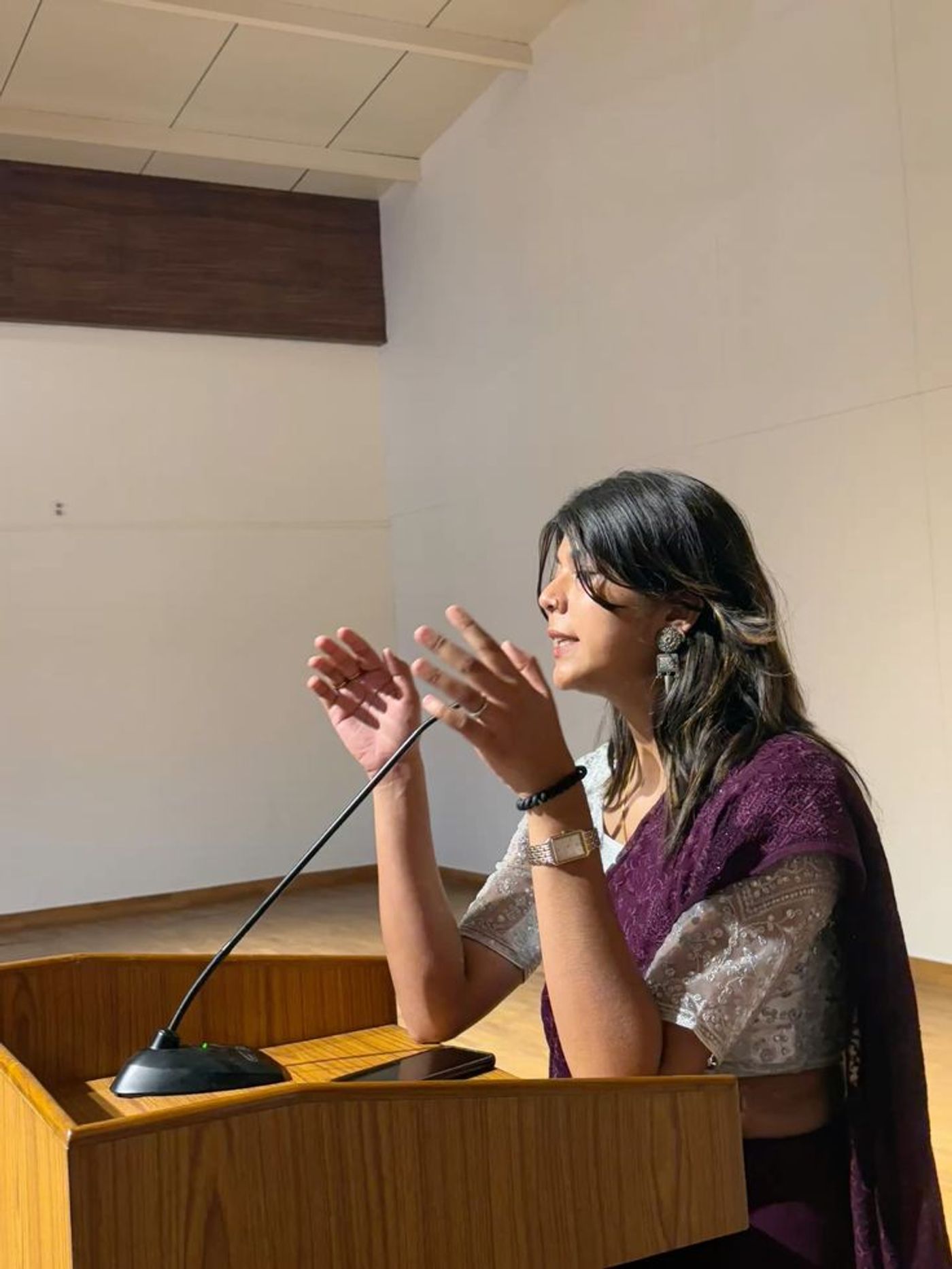
There is a rulebook every visible, ambitious Indian woman inherits, though no one ever hands it to her directly and no one signs their name to it. She learns it the way she learns to walk into a room and quietly count the men already in it, not all at once, but through a thousand small corrections. A laugh softened. A point rephrased with a “sorry, but” in front of it that the sentence never needed. An opinion delivered a shade quieter than she felt it.
Be confident, not intimidating. Be ambitious, but don’t act like you want it. Be vocal, but likeable. Be a leader, but never “too much.” Nobody writes these down because nobody has to. Enough women have already bruised themselves finding the edges of the rule for everyone else to know exactly where the line sits.
We spoke with women who have spent the better part of their adult lives testing that line, and in different ways, simply refusing to stay behind it. Richa Jaggi walked away from a decade-long, high-earning corporate marketing career to co-found Awshad, a medical cannabis wellness company, in a country that still flinches at the word. Manasvi Lakhotia built a custom-footwear label from scratch at twenty-one, learning to survive Mumbai’s manufacturing lanes as one of the only women walking in with a project file instead of a father or a husband beside her, before going on to co-found Peach Collar, a weekly, multi-city roundtable where women founders simply show up and talk business. Both women are in their late thirties. Both are unmarried. Both, in their own words, have paid a price for exactly the ambition that built what they now run.
Alongside their stories, we’ve pulled in the work of three Indian women who have written about this same rulebook from other angles: newsletter writer Kavitha Murali, essayist Mahima Vashisht, and journalist Nilanjana Bhowmick, author of Lies Our Mothers Told Us. Their observations, and links to where we found them, run through the piece below.
Here is what all of them told us about the rules nobody wrote down, and what it actually costs to break them.
Rule One: Be Confident, Not Intimidating
Confidence is supposed to be the prize at the end of a woman’s professional growth. What nobody tells her is that the version available to her comes pre-shrunk, sized for a room that would rather she take up less of it.
“The cost was impostor syndrome. I’m always seeing, am I being too much? I should tone it down.”Richa Jaggi
Richa traces this to her experiences. “If someone is threatened by your ambition, that should be the first red flag,” she told us. It took her until her early thirties, she says, to stop caring what people think and start caring only about her purpose.
Manasvi’s version of the same rule showed up on dates. Men would tell her she was too ambitious, that she’d get the money and the life she wanted anyway, so why push so hard. She has heard some form of “too much” from men her own age as recently as this year, and from parents and in-laws for a decade before that. Both women describe the same quiet arithmetic: the more visibly capable they became, the more they were asked, implicitly, to apologise for it.
Journalist Nilanjana Bhowmick, who interviewed dozens of middle-class Indian women for her book Lies Our Mothers Told Us, has reported that this particular self-doubt is less an individual failing than a documented pattern: women taught to read their own competence as a potential threat to others, and to manage that threat before anyone else even names it. Confidence, in other words, isn’t the part women are missing. It’s the part they’ve been trained to hide.
Neither Richa nor Manasvi resolved this by becoming smaller. Richa’s answer was almost defiant: spite, she told us, half-joking, is a great motivator. If someone tells her she can’t do something, she takes it as the clearest possible reason to go and do it. It isn’t the advice career coaches print on LinkedIn carousels, but it is, apparently, what it takes.
Rule Two: Be Ambitious, But Don’t Act Like You Want It
Wanting things too openly is its own social hazard for a woman in India. The difference between “she worked hard” and “she wanted it badly” is rarely a compliment on the second half.
Manasvi delayed setting up her own manufacturing unit by nearly three years, not because the business wasn’t ready, but because her family still hoped she would marry on a more conventional timeline first. At one point she thought one of the two things would have to go, either the business or the community she was building on the side.
“I decided nothing was doing. One of the two things had to go, either the business, or everything I was building with the community.”Manasvi Lakhotia
Richa has built what she calls a “deal-breaker list,” a short, non-negotiable set of standards, in work and in relationships, that she refuses to compromise on for anyone. If you’re not willing to hold yourself to a standard for your own well-being, she asks, why would you expect anyone else to? It sounds simple until you notice how rarely women are handed permission to keep a list like that without being called difficult for it.
This isn’t a uniquely Indian discomfort, though it is sharpened here by family and marriage timelines that most professional men never have to negotiate against their own careers. Globally, recent workplace research has tracked what researchers now call an ambition gap: a majority of women still say they want to be promoted, but at meaningfully lower rates than men, a shift researchers link less to a loss of drive than to a rational reading of an unsupportive environment. Women aren’t wanting less. They’re learning, correctly, that wanting too visibly gets punished.
Newsletter writer Kavitha Murali has pointed out just how lopsided this gets in practice. An internet search for “male careerism” returns almost nothing, while “female careerism” has spawned its own small industry of concerned commentary, as if wanting a career while female were a diagnosis. She recalls being asked, mid-way through a performance and bonus conversation, how much her husband earned, a question, she notes dryly, no working man is ever asked about his wife’s salary. “Working woman” still sounds like a special category to justify. “Working man” is just a man.
Essayist Mahima Vashisht has documented a version of this that starts even before marriage or motherhood enter the picture: women who share news of a scholarship, a promotion, or a big move are met with some variation of “but what about the kids,” whether or not there are any kids yet to speak of. The subtext, as she frames it, is that a woman’s ambition needs a childcare plan attached before it’s allowed to be celebrated, a bar no father clears a scholarship against.
Rule Three: Be Vocal, But Likeable
Of the four rules, this might be the cruellest, because it asks a woman to solve two things at once that were never designed to be solved together.
Manasvi named the tradeoff directly: she is very high on validation, she told us, she seeks it a lot, and more often than not one of the two things gets compromised, either the respect isn’t there or there’s no likability. She noticed something specific about who tests this line: her employees, her vendors, her community members push back on her decisions in ways she doesn’t believe they would with a male founder. They simply would not speak to a man that way, she said.
“I don’t care about being liked. But for the longest time, I cared about being too much: too ambitious, too firm, too bossy.”Richa Jaggi
Richa has largely stopped trying to solve for likeability at all. She no longer cares how she’s perceived, she told us. Her reframe is that the very words used to discipline ambitious women are, in her view, simply the vocabulary of value. Those adjectives, she says, add to who she is rather than diminish it.
This is close to what Kavitha Murali has also observed in passing: that a single woman seen as too devoted to her work is often assumed, without evidence, to also be too aggressive to get along with, as if ambition and likability were drawing from the same finite account and every deposit into one had to come out of the other.
The data backs up why this rule feels so airtight. Performance-review research on this exact bind has found a wide gap in how assertiveness gets coded by gender: women are far more likely than men to be marked down in reviews for their personal style, called bossy, abrasive, or too loud, for behaviour that draws little comment when a man displays it. Vocal isn’t the problem. Vocal, from a woman, is.
Rule Four: Lead, But Never Be “Too Much”
Both women, unprompted, described something close to code-switching, a version of themselves reserved for work, distinct from the one who exists at home.
Richa argues the two shouldn’t be separate at all. If you need to be a completely different person at the office, she says, you’re not being true to yourself. Your career should be an extension of your personality, not a costume over it. The discipline she has actually had to learn isn’t assertiveness, she says, but patience: she isn’t aggressive, she’s impatient, and that’s the one thing she keeps in check.
Manasvi’s split runs the other way. At work she is organised and exacting; at home, by her own account, she gives in to almost anything without pushback, a contrast she attributes to being, at her core, empathetic and sensitive, a description that has also been thrown back at her as a criticism. She has been told she is too emotional, too sensitive, too led by her heart to be taken seriously in business, often right after she has cried in front of a colleague. She no longer apologises for that either.
“Crying is the most difficult thing for a person to do in front of someone. It means whatever you felt was so deep, it had to come out.”Manasvi Lakhotia
Essayist Mahima Vashisht has traced this exact split all the way to the top: the well-known account of the day Indra Nooyi came home after being named president of PepsiCo, one of the most senior roles a woman had ever held in global business, to find that at home she was still, first and foremost, expected to run an errand. The lesson Vashisht draws from it is blunt: however far a woman climbs at work, home rarely updates her title along with her.
That a woman’s tears at work still read as a professional liability, while a man’s temper rarely does, is the whole rule in miniature: the leadership template was built around a temperament women were never fully allowed to have, and then women are penalised for the temperament they actually bring instead.
What The Rulebook Actually Costs
Add up the four rules and a pattern appears that neither woman needed us to point out: each one asks a woman to hold two contradictory instructions at once. Be seen, but don’t take up space. Be certain, but don’t be sure out loud. Be warm, but don’t be soft. Be strong, but don’t be hard. No version of a woman satisfies all four simultaneously, because the rules were never actually written to be followed. They were written to be a moving target, one that keeps ambitious women perpetually slightly wrong, so the correction never has to end.
Journalist Nilanjana Bhowmick, who spent years reporting on middle-class Indian women for her book Lies Our Mothers Told Us, has argued that this is the real design flaw underneath all four rules: women are handed the language of empowerment, have a career, be independent, be visible, while the actual infrastructure of their lives is built to absorb every one of those ambitions the moment something else needs to give. Her own framing of it has stayed with us: a woman’s dreams and aspirations for herself are treated as the most flexible line item in the household, the first thing offered up, the last thing anyone thinks to protect.
What both Richa and Manasvi describe, in their very different industries, is not that they cracked the rulebook. It’s that they stopped consulting it. Stop people-pleasing as soon as you can, Richa said, addressing an imagined twenty-one-year-old. The minute you leave people-pleasing and start pleasing yourself, ninety percent of your problems disappear. Manasvi’s version is quieter, but no less final: when a choice came down to the business or someone else’s timeline for her life, she chose the business, and has kept choosing it since. Neither woman’s answer would have been printable a decade ago in most Indian households. Both say it now without flinching.
This is, in the end, exactly the gap Draupadi on the Dais exists to close. The unwritten rulebook survives on the same mechanism that keeps women off panels and out of rooms in the first place: invisibility. Rules nobody says out loud can’t be argued with out loud either. The most useful thing we can do, as a platform, and as women watching other women navigate this, is simply keep saying the rules back to each other, in daylight, until they stop working as well as they used to.
Further Reading
Kavitha Murali, “Issue #13: Female careerism,” Girl At Work. https://girlatwork.substack.com/p/female-careerism
Mahima Vashisht, “A career woman is a bad mom,” Womaning. https://womaning.substack.com/p/a-career-woman-is-a-bad-mom
Nilanjana Bhowmick, Lies Our Mothers Told Us: The Indian Woman’s Burden (Aleph Book Company, 2022); reviewed by Riddhi Bhandari and Sriti Ganguly, LSE Review of Books. https://blogs.lse.ac.uk/lsereviewofbooks/2023/03/06/book-review-lies-our-mothers-told-us-the-indian-womans-burden-by-nilanjana-bhowmick/
Draupadi on the Dais: India’s directory for women speakers, panelists, and experts.