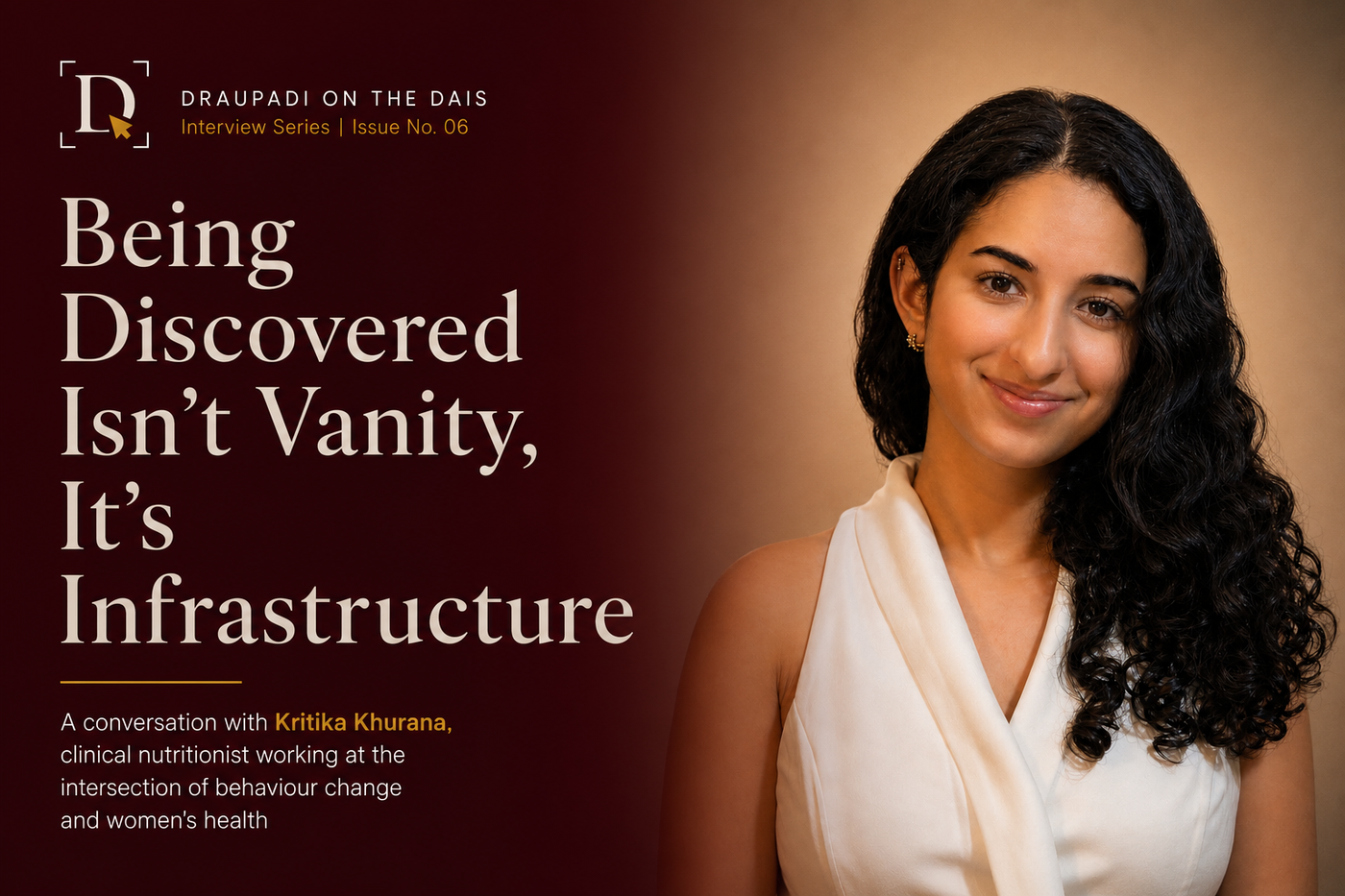
Kritika Khurana is a Registered Associate Nutritionist and clinical health coach. She co-founded Poise Fit, delivered the NHS’s national diabetes prevention programme at Oviva in the UK, and now runs her own nutrition and health coaching practice, working at the intersection of behaviour change, women’s health, and non-restrictive dietary approaches.
There Is No Metric for the Moment Someone Stops Fearing Food
Q1. There is usually work that happens with no name on it, no metric attached, and that most people around you probably do not notice. What is the most important thing you do that fits that description?
I think the most important work I do is helping people feel safe and confident in their choices and bodies. The work of rebuilding trust, helping someone understand that health doesn’t have to come from guilt or perfection is difficult to measure. And there is no metric for the moment when someone stops fearing food, starts listening to their body and / or feels hopeful about their health for the first time in years. I do believe that invisible work is what actually creates lasting change.
Behaviour, Emotions, Environment, Stress, Identity, and Access
Q2. What is the most widely held belief in your field that you quietly, or not so quietly, disagree with?
One belief I absolutely disagree with is that more information automatically leads to better health outcomes. In nutrition / healthcare, it is often assumed that if people know what to eat, they will do it. But my experience has consistently shown me that behaviour, emotions, environment, stress, identity, and access matter as much as knowledge.
I also challenge that health must come from restriction, because sustainable health behaviours are built through compassion and flexibility, not through punishment or doing more.
Building a Philosophy as Much as a Career
Q3. You are known for nutrition and behaviour change, but there is often a project underneath the project, something you are building that does not have a job title attached to it. What is it?
I believe, or I would like to believe that I am building a different way of relating to health. I am trying to create spaces where health feels human rather than performative. I work at the intersection of nutrition, behaviour change, women’s health, public health and digital health, and I hope to contribute to making healthcare more compassionate, accessible, and sustainable. It doesn’t have a formal title yet, but it feels like I’m building a philosophy as much as a career.
Visibility Is Not Just About Personal Recognition
Q4. Being on DotD is a professional decision, not a self-promotion exercise. What made you decide to show up for yourself here?
For a very long time, I was more comfortable doing the work than talking about it. But I realised that visibility is not just about personal recognition, but about creating opportunities for the ideas and values you care about to reach more people. I decided to show up because I believe that conversations around health (especially women’s health) need more nuance and compassion. If sharing my journey and perspective can contribute to that conversation, then showing up feels worth it.
Sometimes You Need to Create the Room Yourself
Q5. There is a version of visibility that requires performance, constant output, constant presence. And there is another version that is just being findable in the right places. How do you think about the difference?
I think about visibility as service rather than performance. If visibility requires constant output, one can often become disconnected from their purpose and it can lead to burnout. And all of us know that feeling burnt out all the time isn’t a great feeling!
The kind of visibility I value is rooted in authenticity and consistency. I don’t want to be everywhere, but in the right rooms, having meaningful conversations with the right people. And it’s not easy finding such rooms, sometimes you need to create one yourself. So, being findable to who needs your work matters more than being visible to everyone.
Being Discovered Isn’t Vanity, It’s Infrastructure
Q6. Have you ever watched someone with a thinner CV get called into a room you should have been in? What did that teach you about how discovery actually works?
Of course, and very often! In the age of social media, positioning yourself as a health expert has become easier than ever. I often watch people with thinner CVs, less clinical experience, or no formal training get invited into rooms I would have loved to be in. It has now become difficult to distinguish depth from visibility, and I have learnt that discovery is not the same as merit.
We don’t always discover the most knowledgeable people, we discover the people who are easiest to find and trust. This has been a difficult but important lesson for me. It made me realise that being discovered isn’t vanity, it’s infrastructure. If you want your work to have an impact, you have to be discoverable.
Who Has Earned the Responsibility of Being Listened To
Q7. If you could change one thing about how your field identifies, develops, or elevates expertise, what would it be?
I’d like us to stop asking “Who has the biggest audience?” and start asking “Who has earned the responsibility of being listened to?”. In nutrition and healthcare, credentials come with years of training, scientific understanding, and professional accountability. I’d like to see us return to a model where credibility comes before loud following, and where expertise is measured by both knowledge and impact.
Kritika Khurana is a Registered Associate Nutritionist and health coach. This interview was conducted as part of the Draupadi on the Dais Interview Series.